Sunday, 4 June 2017

Ask the expert ... (string theory)

For the last few weeks I've been going in to a local secondary school on a Friday lunchtime and attempting to answer students' questions about science and the environment. When I had to be away one week I asked if they could put some down on paper and I'd return the compliment by writing down my replies. What follows is my top of the head response to the first question.

What is string theory?

Two extremely successful theories dominate modern physics. 

One of them, Quantum Mechanics (QM) covers the world of the very small and explains a huge range of phenomena from the spectrum of light emitted by different atoms, the structure of the periodic table (i.e why we have the elements we have and why they react with each other in the ways they do) all the way through to how the semi-conductor devices in our phones and computers manage to do what they do. Remembering that in science a theory isn't just a piece of idle speculation but the best available explanation of the facts, Quantum Mechanics is the most precise theory that has ever been devised (which doesn't mean, of course, that it couldn't be replaced if a more powerful theory came along)

The other, the General Theory of Relativity (GTR) not only explains the warped relationships between space, time and matter that govern the behaviour of stars and galaxies but also makes well tested predictions about the way, for example, the strength of a gravitational field affects time (to put it, simply clocks run more slowly in a strong gravitational field than a weak one). If the time signals from the clocks on the satellites that our phones use to work out our GPS coordinates weren't corrected for this then the system simply wouldn't work.   (As you move away from the Earth the gravitational field gets weaker and the clocks on a satellite run faster). Atomic clocks can now be made that are so precise that you can tell, just by looking at the time, whether they're on the floor of the lab or have been put up onto a bench.

Unfortunately these two theories, one governing the world of the very small the other that of the very large, are fundamentally incompatible. In practice, this doesn't matter very much because there are few places, apart from the inside and boundary of a black hole, where the rules of one domain need to be applied to the other. But for some physicists, those who aren't just interested in getting the sums right but also want to know that they're getting as close to the truth about the Universe as they can, they'd really like to have a single Unified Theory that covered everything. Everything from the smallest fundamental particle right the way up to the largest cluster of galaxies. 

Physicists have had over 100 years to get used to the idea that the three dimensions of space and the one dimension of time can't be considered separately from one another and instead have to be thought of as a unified 4 dimensional entity space-time. Now whilst it can make your head hurt to try to think of 4 dimensions, all a physicist has to do is describe an event using 4 numbers ( x, y, z and t) and then, for example, use the appropriate equations see what would happen to these 4 numbers if the event happened to be observed by someone travelling past Earth in a high speed rocket. 

The most promising attempts to unify these two theories have been built around the concept of a field. Just as the strength and direction of a gravitational field describes the force a mass would experience if it happened to be there, so the strength of an electric field describes the force that a charged particle would experience if it happened to be there (it turns out that magnetic fields arise when charges are in motion and the two fields, electric and magnetic, are actually the same thing but seen by someone who is either stationary with respect to the charge (electric) or moving relative to the charge (magnetic)). 

It turns out that gravity and electromagnetism are not the only forces that apply in nature. There's also the strong nuclear force, that holds an atomic nucleus together and the weak nuclear force that prevents some nuclear decays (e.g stops the neutrons in a nucleus from spontaneously decaying into a proton and an electron (which is what they do if they're left on their own)) Each of these forces is associated with it's own field and the particles, for want of a better word, that transmit the forces can all be regarded as vibrations in their respective field. Unfortunately, whilst this can be done for Electromagnetism, the Strong Force and the Weak force, it can't be done for Gravity where the big problem is explaining why gravity is so weak.*

String theory uses this idea of fields and vibrations, along with all the complicated mathematics, to describe all of the fundamental particles, and not just the force carriers, as vibrations in their own fields. By doing this they have a theory that unites QM and GTR. So, rather than just using 4 numbers to describe an event you need even more to describe the state of all these other fields and hence specify which particles are there and how they're interacting. If you think of each of these fields as being another dimension then the various fundamental particles are simply one dimensional vibrations in these different dimensions. It is proposed that gravity leaks into all these additional dimensions, which explains why it is so weak in the 3 that we're familiar with. And what one dimensional objects are we familiar with, pieces of string.

* I used to do a calculation with A level physics students about what would happen if the charge on an electron was a tiny bit different in size to that of a proton. This would mean that instead of being electrically neutral we'd each carry a net negative or positive charge (depending which was bigger). Since like charges repel I asked them to estimate the force between themselves and their nearest neighbour. For want of doing the sums again I seem top remember that if they differed by one part in a million million million (i.e not a lot) the repulsive force between two typical students 1m apart was of the order of 90 tonnes.

Assume a mass of each person of about 70kg, assume they're made entirely of water, use atomic masses and Avogadro's constant to estimate the number of water molecules and hence the total number of electrons or protons (18 of each per water molecule). look up the charge on a single electron to work out the total negative charge on the person, assume that this differs slightly from the total positive charge and then use Coulombs law calculate the force between two adjacent students.


Three dimensions into two doesn't really go

Thursday, 9 February 2017

A simple plan to get more people walking

There's little doubt that if we could get more people to walk or cycle for short journeys there'd be less pollution, less congestion and their health would improve. Wouldn't it be nice if you could just point out the benefits, assume that people would see what's in their best interests, abandon their ingrained social habits, put on their sensible shoes, leave the car keys at home, and walk. Not likely to work. Sad.

What's needed is a plan. First, to give the very clear health message that if you want to live a long and healthy life then one of the best things you can do is to keep walking. Second, to give regular reminders that walking short journeys doesn't actually take that long. Third, to develop public infrastructure so that walking and cycling are not only easier and safer but also have higher status.

Now whilst I might be won over by health messages, evidence suggests that, in general, just telling people something is good for them doesn't work. Indeed it can often provoke a defensive backlash. With any communications strategy there's a time and place and the right time and place for messages about health is when people are visiting the doctor. Suppose that next to the reception at your GP's surgery there was a simple poster showing a map of the local area with the surgery at the centre. Concentric circles around the surgery could be labelled with the typical time it would take to walk there. At the top of the poster would be the surgery's name and address and at the bottom the simple message "Walking is good for you". Put up a few more posters in the waiting area with the simple message "For a healthy old age keep walking". It's a simple message, delivered in the right place to the right people and, because it's in a doctor's surgery, clearly carries medical authority.

A few years ago responsibility for public health in England and Wales was handed over to Local Authorities. These are also the bodies responsible for things like waste disposal, schools, social care and highways. At an institutional level I've no doubt that they recognise the importance of encouraging everyday physical activity, but for a number of reasons it hasn't been far up their priorities. There are clearly opportunities to promote the message in schools (encouraging parents to walk their children to school rather than drive) and in social care (making sure looked after people are given the opportunity to get out and walk) but also in the ways in which we draw attention to existing infrastructure.

Over the years we've made a number of improvements to the old Scarborough Whitby railway line. One of the ones I'm most proud of is the Candler Street ramp in Scarborough. This connects a densely populated set of streets directly to the track in a place where there was once just a retaining wall. When the ramp was first installed it wasn't used by very many people. It took about a year to be discovered and then incorporated into everyday journeys. Now it's simply taken for granted and in near constant use. 

A good way to remind people that they could choose to walk is to put up signs that give directions to key destinations along with typical walking times. Each time you're sat in a traffic jam alongside a sign you'd not only be reminded that you could have chosen to walk but also that at least someone thinks this might be a good idea.

So, part 1 = simple messages in GP surgeries and hospitals, part 2 = well signed walking routes with times and distances, part 3 = raise the quality of the infrastructure for walking and cycling so that it has a higher status and feels safe.


Candler Street Ramp 

Tuesday, 31 January 2017

Bike Walk (a proposal)

In common with many people I do my best thinking when out walking or cycling. Of course, what you end up thinking about isn't necessarily what you might have intended and is often inspired by the places you find yourself.

Anyone who's read more than a few of my blog posts will know that I write a lot about everyday physical activity, it's importance in public health and the psycho, social and political barriers that stop it rising up the political agenda, and, while there's an increasing number of people setting their own fitness goals, joining boot camps and posting their achievements on Facebook, the real challenge is getting the habitually sedentary to take the first step.

There's no doubting that the bicycle is one of the world's greatest inventions. It's the most efficient means of land transportation that has ever been devised and is better than any animal that has ever evolved. Those of us who ride a lot, though nowhere near as much as some, even enjoy riding up hills and will deliberately seek them out. Part of this is the personal pleasure of the challenge, the rhythms of legs, breathing and heart rate, the flush of endorphins and the sheer satisfaction of achievement, but part is also the changing views as you climb and the revealed vista when you go over the top. It's about having a direct personal relationship with the landscape.

But if you're not particularly fit (yet), the hills are a barrier and not a source of pleasure. We might advise you to get in a low gear and then go steadily at a pace you can maintain, but this isn't much help if the gears on your bike just don't quite go low enough. When that happens the only choice is to get off and walk and in some cycling circles this is seen as a defeat.

Yesterday's ride took me out of Scarborough and up Harwood Dale. The roads are hilly but quiet, with good lines of sight and some delightful views. 


Looking up Harwood Dale

Just before taking this picture a thought bubbled to the surface. Why not organise some Bike Walks? You could either think of this as a ride where it's OK to get off the bike and walk, or a walk where you sometimes get on the bike and ride. 

In this case, the two end points could be the Yew Tree Cafe in Scalby and the Grainary about 6 miles away up Harwood Dale. Participants could either bring their bikes by car up to Scalby or, if coming from central Scarborough, simply up the Cinder Track and turn left along Station Road. 

As well as being able to enjoy the scenery and the company, they'd get well needed exercise and the chance to learn a bit of road-craft on the bike. What goes up must come down, so the only requirement is brakes that work.


Friday, 20 January 2017

Litter in storm drains

What's the problem


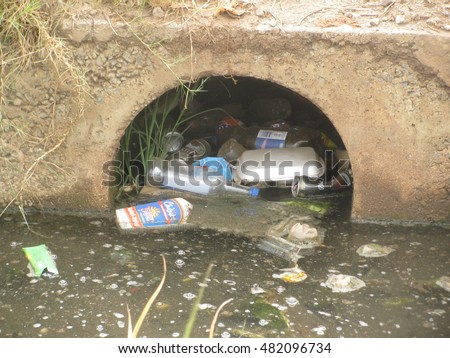
You'll have seen pictures of sea birds who've died with their guts full of discarded plastic objects. You'll know that turtles can easily mistake a plastic bag for a jelly fish. You'll know that microplastic particles pose an increasing threat to marine ecosystems. You'll know that litter isn't just unsightly but has a direct impact on the environment. But one thing that I hadn't appreciated until recently was that in many parts of the world litter is making urban flooding much worse. A contact in Zambia is particularly concerned with this problem so I'm writing this simple blog post in the hope that it might help.


Blocked storm drain in Harare


Litter isn't what it used to be


Archaeologists make a good part of their living from studying ancient litter; the broken pots, discarded stone tools, bones and shells, lost copper bracelets and rusted old knives of the ancient world. It's only on rare occasions that organic material, such as wooden foundations and bits of old boats, will survive (e.g. at Star Carr, the earliest known site of habitation in the UK, and just a couple of miles south from where I sit, wooden objects have survived 9000 years by being buried in peat). The invention of plastics will make it much easier for the archaeologists of the future to find out about us.


Reducing the amount of litter generated.


One way to reduce litter is to cut off the supply. A few years ago it was possible to identify the nearest supermarket by the colour of the discarded plastic bags. Orange for Sainsbury's, blue and white for Tesco's, yellow and black for Morrison's. Since we've  had to pay for them demand has dropped by 85%. Many countries have deposit schemes on plastic bottles and aluminium cans so that even if the original user doesn't take them back there's a good chance that someone else will. 


First step = municipal waste collection


Unless a town or city has an effective system for collecting domestic waste then any other efforts to reduce litter are likely to be in vain. Of course there are expenses involved in doing this, but flooding disrupts communities, can spread disease and costs money to clear up.


Changing behaviour


Persuading people not to drop litter in the first place is more difficult. We're more responsive to what the people around us actually do than any official message. In the obscurely titled blog post "The exception proves the rule" I looked at one of the few studies of littering behaviour I could find. The simple conclusion of this study was that litter breeds litter. Unless you actually get rid of most of the existing litter it's very hard to stop people simply dropping more. 


First big clean up


Once you've got an area cleaned up, which might involve paying local people to help do it, the challenge then is to keep it clean. Eating food on the street is now an established habit across the world and is unlikely to end. So unless there are convenient bins for people to put their litter in, which are emptied before they start overflowing, the problem will simply recur.


Litter bins


When we were addressing the problem on the old railway line in Scarborough (which is now a quiet route for walkers and cyclists) we made sure that there was a bin at every point of access. Not only did this reduce the amount of litter left on the track but it also meant that casual litter pickers, such as myself, had somewhere convenient to put the litter that we'd picked. We've been  surprised how many fellow citizens now respond to the sight of someone else's litter by picking it up and putting it in the bin. An additional advantage of keeping the track relatively clean is that it feels like a safer, looked after, space and more vulnerable people are happier to use it.


Community participation


But every now and then, particularly in winter when the vegetation dies back and hidden litter is revealed, we do have to have an organised litter pick and to do this you need to have active citizens who are prepared to join in. And this, in turn, needs people to have a sense of ownership of the public space.


Other cultural norms are possible


Changing cultural attitudes to litter is difficult but not impossible. Most of us live within the social norms that are set by the people around us and these are different all over the world. We like going on holiday to the Dalmation coast of Croatia. One of the things we like about it is that there is a walking culture. In the evenings it's the habit for everyone to go out and promenade, the paths and footways are all maintained and there's very little litter. Having spoken to Croats about this the response was simple "it's just not something we do". They either put it in a bin or take it home. Indeed, when we spent a week last year wandering around the island of Mljet I saw only one piece of litter and couldn't help taking a picture.


The only piece of litter we saw on Mljet (august 2016)

Just so you don't think I spent all my time staring at the ground......


Looking down on the the salt water lakes of Mljet

A couple of links

Here's a proposal for a study in Cape Town. which suggests using litter traps on storm drains and then correlating the amount trapped this with different strategies used to reduce litter in different catchments. I was not able to find out if this work actually took place

A summary of Behavioural interventions that might be taken to reduce littering in the UK


Thursday, 19 January 2017

Public participation in Public Space.

The value of public space


The places we share have enormous value. Parks, squares, gardens, cemeteries, little scraps of "waste" ground, they're the places we socialise, make contact with nature, develop ourselves through play, keep ourselves fit and, perhaps above all, they're places where we can all meet as equals, regardless of wealth or status.

Of course, some people see the uses that we make of public space as a wasted opportunity to make money. They'd prefer us to pay to enter their theme park or pay the subscription to the golf club. And of course, because of their essentially democratic nature, they're places that many of the most powerful in our societies actively avoid. 

I've been involved in attempts to improve the quality of public space in my own area for many years and have some experience of what's needed to succeed or, more often, what isn't enough to succeed. Of course, lessons drawn here, a modest seaside town in the north of England (Scarborough), may not work everywhere, but a lot of them concern basic human nature and the relationships between people and their civic authorities. I suspect that these things are similar wherever we happen to be..

Proximity and use


Firstly, and perhaps obviously, people's relationship to public space depends a) on their proximity to it and b) whether, and how often, they make use of it. For example, I'm keen to improve a stretch of old railway as a route for walkers and cyclists but most of the local politicians and public officials don't use this space very often because they tend to drive rather than walk. This means that they're only indirectly aware of the problems that need to be addressed and because they don't impact directly upon their quality of life, or on that of most of the social groups with which they identify, they tend to remain at the bottom of the political agenda.

In our town, a number of Friends Groups have been established which work with the local authority to improve their particular bit of space. The groups which work well are those for spaces that are close to where people live and are geographically limited. I know from my experience with the old railway that while many people will identify with short stretches, not many will do so with all 22 miles. Our strategy to deal with this was to form spin off Friends groups for distinct spaces along the route and to split our responsibilities for the line as a whole with a sister group based at the other end of the line in Whitby.


A sense of ownership


It's often said that the key to getting people involved in the management and maintenance of public space is to give them a sense of ownership. But ownership implies control, maybe not total, but control nonetheless. So, if a civic authority carries out a consultation exercise but only appears to listen when the people want what they want, then the process breaks down. Getting genuine public participation requires a genuine sense of partnership; where those in power genuinely listen to those without and are seen to try to find ways to put what the public want into practice rather than just falling back on their superior knowledge and telling them why it can't. 

It's not always obvious who might  feel that they own a space. For example, there's a stretch of the old railway that was once a set of carriage sidings (where carriages from excursion trains that had brought workers for a day out to the town would be left until it was time to go home). Because it was a rail yard, the houses on each side had their backs to it. This means that no one directly overlooks it and neither of the communities on either side has fully taken it as their own. The boundary between local administrative divisions also runs along the line which means that none of the councillors fully claims the space as their own either.


The old railway running between Barrowcliff and Northstead

Civic engagement


Whilst there are undoubtedly roles that can be played by volunteers, including strategic roles about the direction of development and the detail of design as well as manual tasks such as litter picking and tree planting, this cannot be done without consistent support from the civic authorities. We can suggest where work needs to be done, and get in touch with people that are prepared to do it, but we can't always be expected to supply the relevant tools, equipment and materials and, on publicly owned land, there are lots of things we can't just go ahead and do without the landowner's express permission. Volunteers can assist civic authorities but cannot entirely replace them.

At the tail end of the last century, Scarborough received central Government funding to build two Park and Ride car parks. Connected by bus services into the town, their aim was to reduce congestion in the town centre. In order to show that this was part of a bigger traffic reduction scheme the Council was obliged to set up a Cycle Forum to explore the best ways to get more people on bikes. There were about 50 of us at the initial meetings, and we happily pored over maps and drew up plans. Only a very few of these ever came to fruition and, once the Park and Ride scheme had been built, the Cycle Forum quietly had its support withdrawn. As far as the civic authority was concerned it was job done. There'd never really been any real commitment to developing and implementing a Cycle Strategy and the people who'd been engaged in the process inevitably became disillusioned and distrustful. 

The first meetings of any organisation set up to harness public engagement tend to be well attended. Organisations get established, people agree to take on the roles of Chair, Secretary and Treasurer, and the work of developing plans and, with a fair wind, putting them into practice can begin. Attendance at meetings then inevitably falls. My hypothesis is that many of those who've attended at the start want something to happen but don't want the direct responsibility of making it happen. By their initial attendance they validate the decisions and actions of those that do. However, as time passes, people's lives change and those who were originally prepared to take on responsibility may no longer be able to do so. At this stage the organisation runs the risk of collapse through lack of continuity. But there is always one partner that will be there, the civic authority. If they provide suitable administrative support, then an organisation can be resuscitated with it's aims, plans and objectives intact and survive any potential collapse.

I'm one of those annoying people who, when asked "Why don't they do this or that?", will come out with a list of reasons why they don't (having first identified who this mysterious they are) I know that asking the question is really just a way of saying "I think so and so ought to happen" and, rather than use this list of reasons as an excuse for not doing anything, civic authorities, and their partners, need to be able to acknowledge difficulties as difficulties to be overcome and not insurmountable barriers.

Summary


There's plenty of research out there linking access to good quality public spaces with not only the physical and mental health of individuals but also of the community at large. (I could provide links but just search on any of these associations and you'll find plenty for yourself). People will engage with public space if it's close to them and they use it. But to do anything really worthwhile needs the active commitment of the civic authorities. Anyone who's attempted to make things change knows that there are many obstacles in the way. The challenge, in particular for civic authorities, is to help to find a way around these obstacles rather than simply point them out as a reason why things can't be done.


Tuesday, 10 January 2017

You should have been there.

The combination of a winter cold and the prospect of black ice (see Frosty Hollows) has meant that I haven't been getting out on my bike quite as much as usual and so it was a pleasure to go out for a couple of hours on Sunday, get my heart and lungs working and enjoy the
local scenery. 

For the last couple of years as well as going out on my own I've also gone out with one of the local cycle clubs. Some of the club's members are into the competitive stuff like time trials. A good proportion log the speed and distance of every ride. I just join in with the social rides and, if I want to know how far we've gone, simply ask someone else. The trick to going a long way, in a companionable fashion, is to go at talking pace; though I do tend to talk even when we're going up some of the more severe hills and replies are often a little breathless with more than a hint of "shut up". But, the one thing we share, apart from having fun riding bikes,  is a love of the ever changing local countryside. A month ago, on an early morning Wednesday ride, it was the quality of the light and the low hanging cloud that hugged the edges of the hills as we came down through Langdale End. On Sunday, it was the shape of the underlying landscape as revealed through winter trees shorn of their foliage.

I've always been mildly short sighted but, as long as I could still read a number plate at regulation distance, I din't always wear my glasses. These days I wear them nearly all the time. I choose frames that are wider than they are deep. This  means that I can do short distance work, like reading a map, by simply looking underneath them. It also means that my clear view of the distance is framed by the glasses and as I'm riding along I often find myself thinking what a nice picture this would make. But I know that if you try to capture it on film (nowadays, temporarily burn into the pixels of a Charge Coupled Device) it's very hard to capture the full effect. This is particularly true when you're looking at an extended landscape rather than a close detail. 

In the past week I've read a lot of tributes to the late John Berger. One of the things he was said to have said, and I paraphrase, is that he no longer made many attempts to photograph the world around him because it distracted from the act of looking. Imagine a 3D immersible environment in which your every movement changes the perspective and no matter how close you look there's always more detail to be see. I know let's call it reality.

So, rather than attempt to frame the world into a photograph that never quite manages to create the feeling you get when you're actually there, just get out, move around, and look.


Here's one I took earlier from a spot passed on Sunday


Monday, 9 January 2017

Norms that need challenging

In Denmark.loads of people ride bikes. It's normal. I read that some respondents to a physical activity survey there reported that they didn't take any exercise even though they cycled 5 miles to work every day. 

Now I might go out for a hilly bike ride now and then, but most of the exercise I get is simply incidental. I make lots of short journeys (less than 5 miles), the vast majority on foot or bike, and if exercise only feels like it counts if you've made an effort to take it, I can understand why these Danes thought the way they did.  This is a little bit like the way in which older everyday familiar technologies, such as chairs, washing lines and pencils, don't really seem to count as technology; a status that tends to be reserved for everything that doesn't quite work yetBut, just as the pencil was a crucial technology in the development of natural history ( you could bring home pictures of what you'd seen), incidental exercise is crucial in maintaining public health.

A decade ago Scarborough was declared a Renaissance town and lots of public meetings were held. I, of course, took the opportunity to emphasise the positive role bicycles could play in this process. The arguments I made, about public health, pollution, traffic, conviviality etc were by and large incontrovertible (though I say so myself) but this doesn't mean that they were welcome. A typical response was "it's alright for you, you're fit". The largely ineffective words I used to respond to these comments confidently asserted that just as eggs definitely came before chickens if I seem fit it's because I ride my bike.

Back when I had a dog to take for regular walks, I inevitably got into conversation with fellow dog walkers. I remember a few in which what was to me some outrageous remark or other was supported by the simple evidence that everyone the dog walker knew thought the same thing. I'd then point out that if we went into a cafe, in Baghdad for example,  we'd find a group of old men there who'd think something completely different to you but would also believe it to be true because all the people they knew thought it too. At this point in the conversation, a dog could be counted on to need attention and we'd end up going our separate ways. The point of this is simply that most people most of the time do not think things through for themselves, instead they say what they think other people like them would say. 

The Nobel prize winning economist and psychologist Daniel Kahneman in his book "Thinking, Fast and Slow" drew a firm distinction between Type 1 and Type 2 thinking. Type 1 gives us  fast instinctive decisions and opinions, Type 2 slower, more careful, deliberations. These fast responses tend to reflect the social norms of those that surround us. The wisdom that we've received from others. As someone of limited instinctive social intelligence, I've never been very good at picking up what an appropriate set of received opinions is and have the annoying habit of, if not quite directly questioning what I'm being told, not quite managing to suppress a sceptical frown.

So, when I start talking about the dangers of a sedentary lifestyle and the benefits of leaving the car at home, or at least not insisting on parking the damn thing right next to your intended destination, the speed of the typical response "oh you'll never get people to do that, we're too lazy" strongly suggests that this is a Type 1 response and tells me more about the speaker's social identity than whether or not they've got a valid point. It's not hard to imagine that a typical Dane might give a different response. 

Of course there are times in our evolutionary past when it made sense to conserve our personal energy reserves. There's no point going out on a long hunting expedition if there's little prospect of bringing home anything to eat. If you've just had your big share of a wild pig that had to be eaten before it went off, or scavengers came to steal it, then it makes sense to chill for a while and let your guts get on with it. But in an age when many of us are oversupplied with food and can be fairly confident that there will be something on the plate next week, let alone in a few hours time, the need to conserve our energy supplies is hardly paramount. 

Were I to be a visitor from another planet, I suspect I might suggest that the real reason why so many of us are so reluctant  to get around under our own steam is that we've been made car dependent. Not just physically by designing our towns and cities so that it's more comfortable, and feels safer, to drive than to walk or cycle, but also psychologically with cars as signifiers of status and social identity. But that's a tale for another day. 


From the Transport Research Laboratory Report (1997)
"Attitudes to Cycling:a qualitative study and conceptual framework" 

Previously posted in "Dispositional or Situational"


After we've stopped people smoking, or drinking too much, the next biggest impact on their health is physical inactivity. Given that our dependence on motor cars has not only exposed huge numbers of us to noise, pollution and direct physical harm but has also made it possible, indeed aspirational, to lead dangerously sedentary lives, it's high time that the destructive nature of this dependency made its way up the list of our political priorities. 

I hereby admit to having no easy answers....